Over the past year I’ve had the chance to work with a number of creatives, who are often people that work with their hands. Many of them had whole other lives before this one and found their way into creating, similar to the way I found my way into photography while working in healthcare. It’s been a real treat to get to know their stories, and I try to build them into every shoot. Creative business owners are working at a strange moment, as AI can generate a polished product shot in seconds now. So the question isn’t just how to get clean photos of a product anymore. It’s how to show something a computer can’t fake – the person behind it.
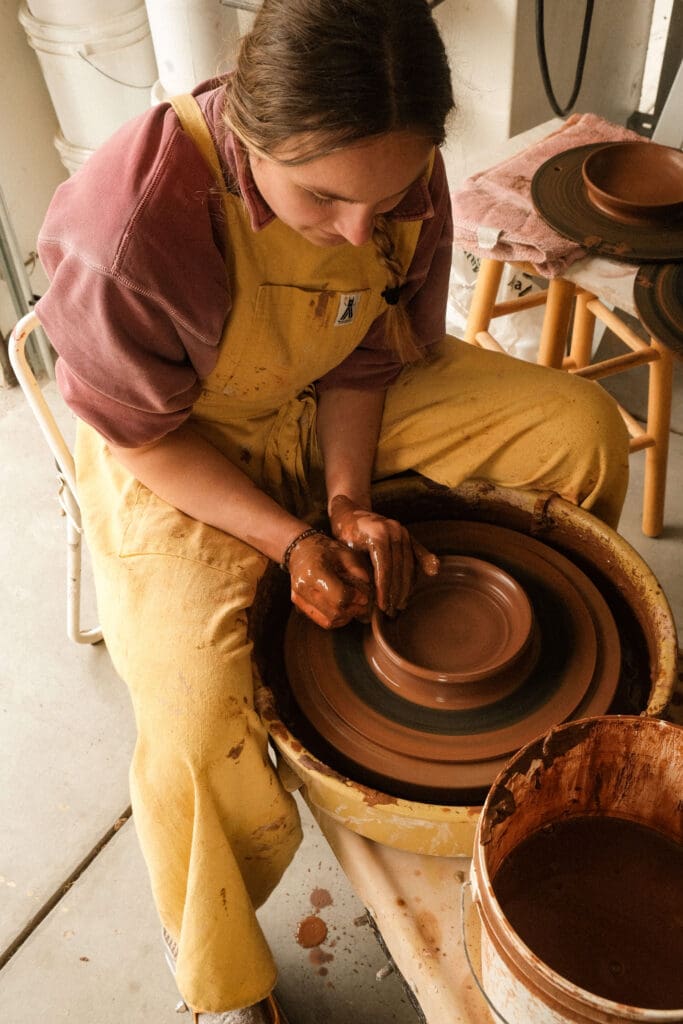
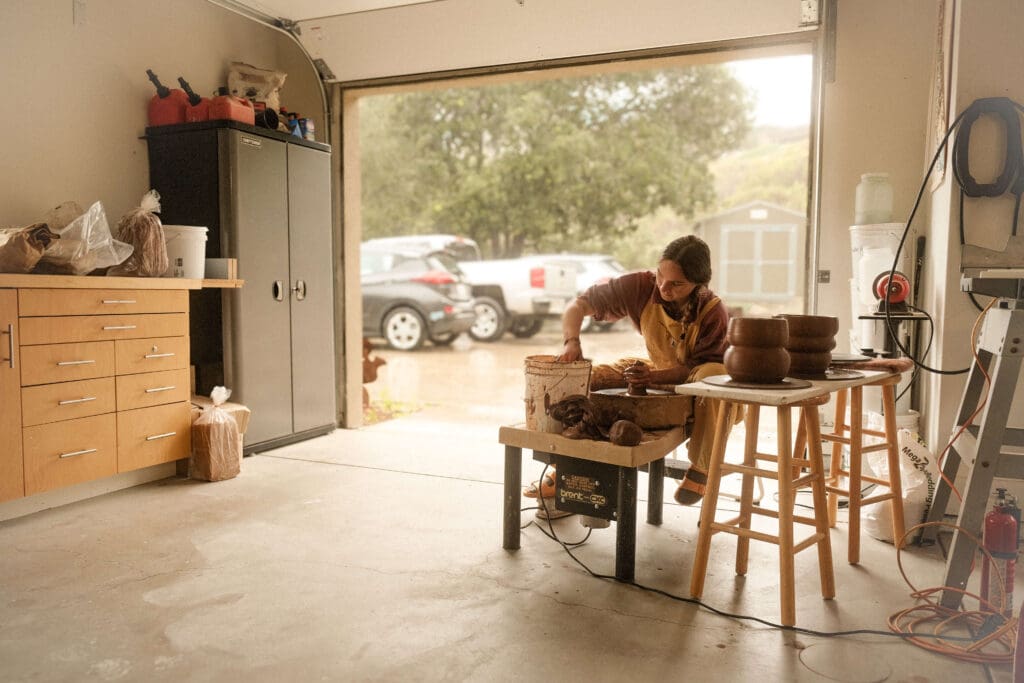
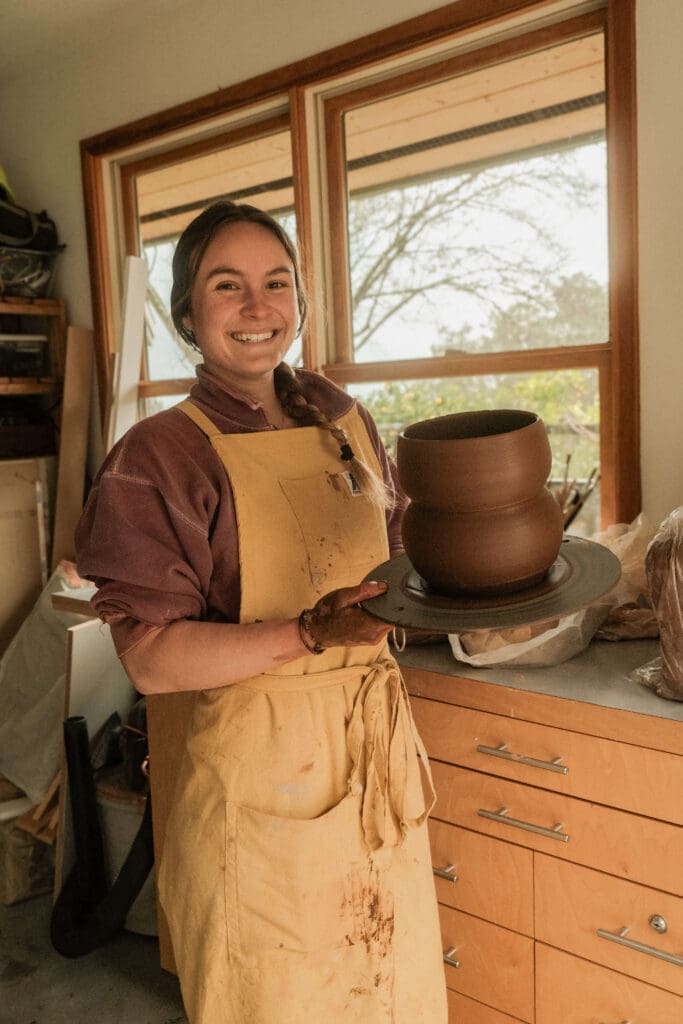
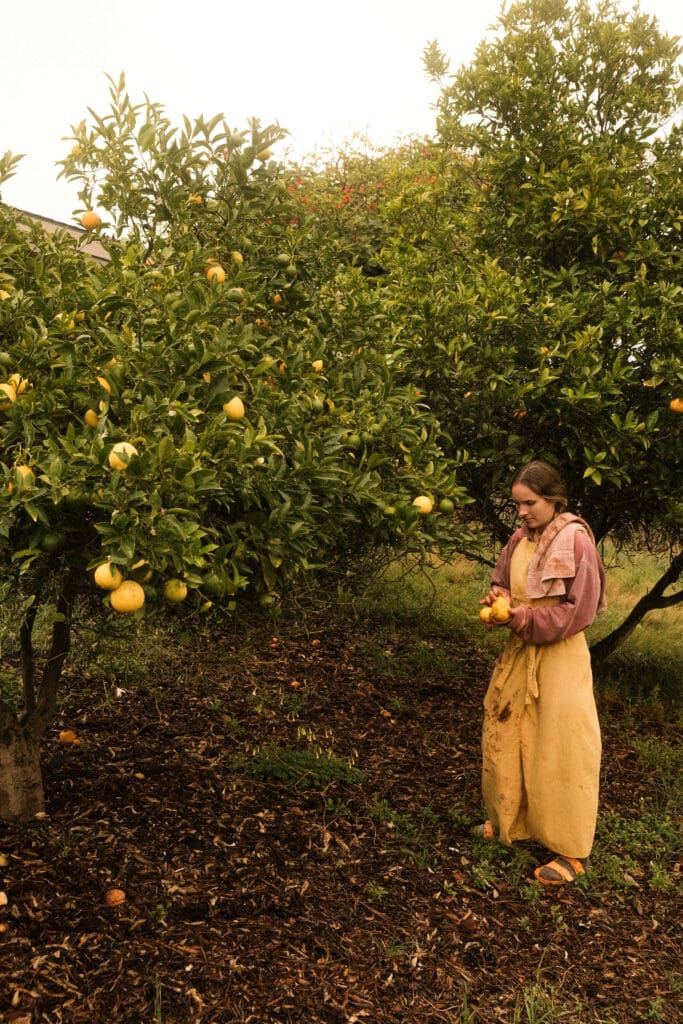
That’s the overall thinking I bring to every shoot. I’m not photographing only your product, I’m photographing you. The photos below are from a shoot I did this year with Celeste, who makes her own pottery. She throws in her home studio on the Central Coast, which has a kiln in the corner, wonderful-smelling citrus trees out back, and surfboards racked in the background. Her work is rooted in a place that’s deeply personal. Our shoot was built around her: hands in wet clay, the blur of her wheel, light coming through her door on our overcast morning. The pots do show up in the story, but as evidence of her love for her craft.
My photoshoots are centered on the creator
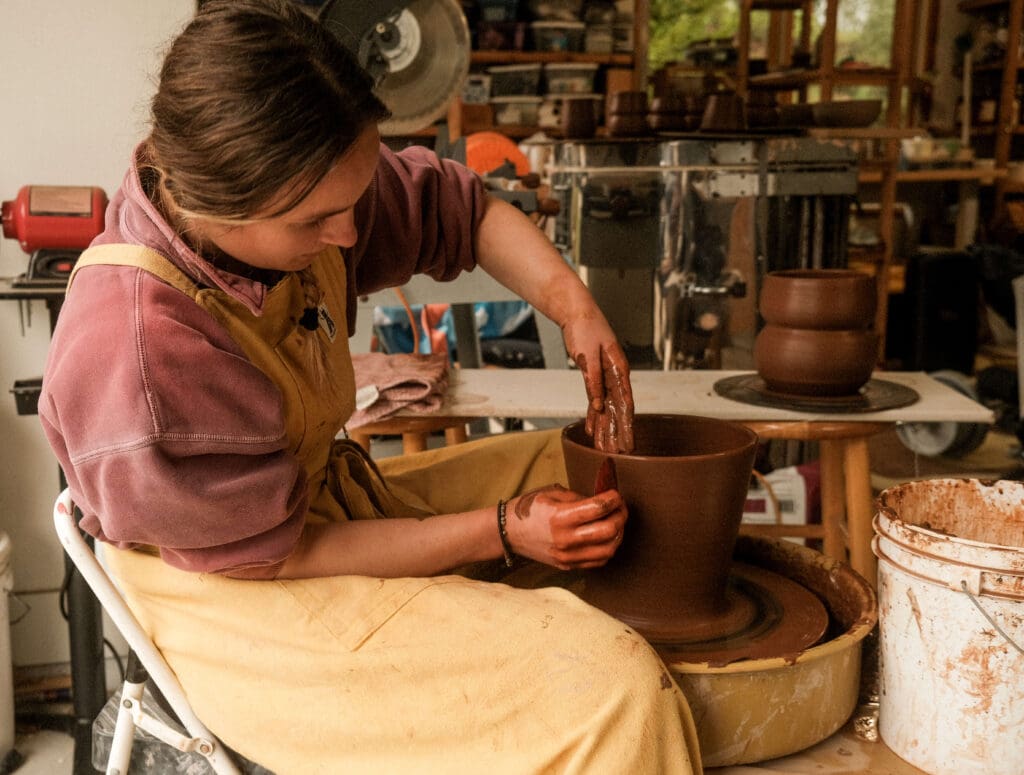
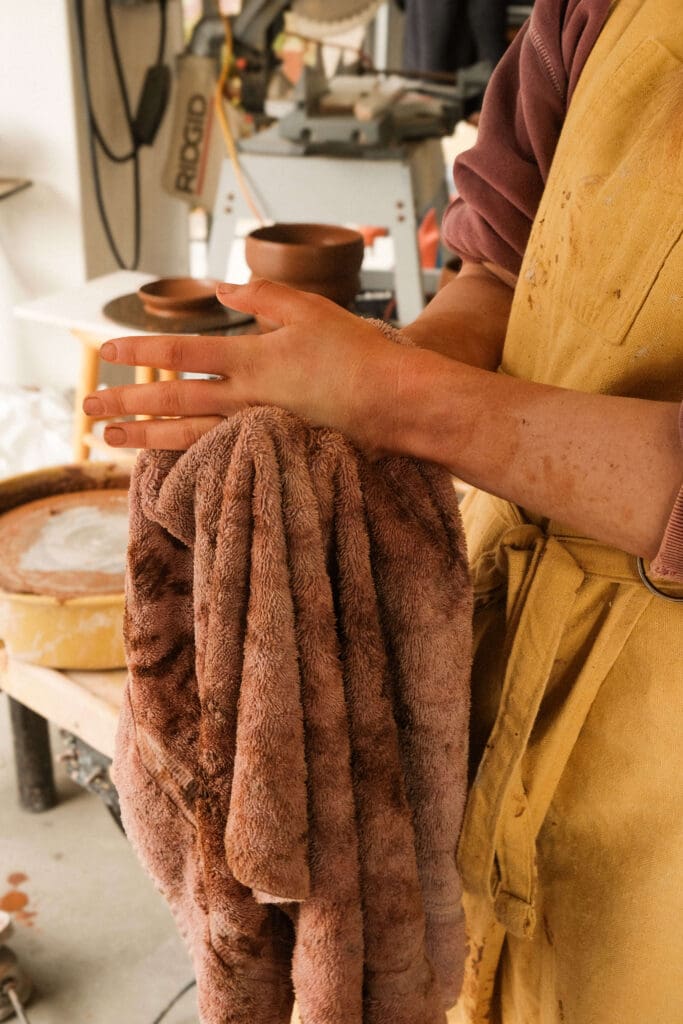
People are buying into a person and a story now, not only an object. Before I shoot, I send over a pitch deck of inspiration for the day. And on the day itself, before I ever pick up a camera, I spend time getting familiar with a creator’s space and hearing more about their own journey into their craft. This helps me to map out shots, but it also means I watch people light up talking about their work, and that comes through in our photos later. What’s most compelling to me (and to buyers) is a maker mid-process, actually working. For example, the concentration on someone’s face while they’re centering clay says more than any caption could. In our session, Celeste threw about ten pots and I circled around her to get up close, distance shots, and my favorite – detailed shots of her hands. The purpose of these photos is to build trust and let the care speak for itself.
Real beats polished
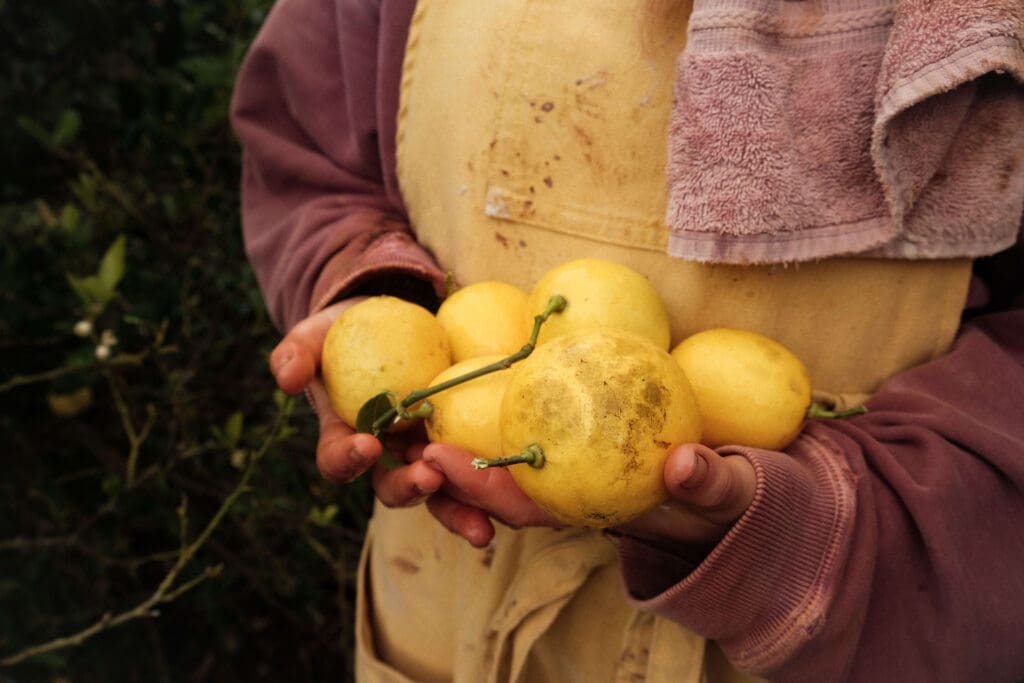
Polished is what AI is good at now – it’s fast, cheap, and available to anyone. What actually reads as human is texture: the clay-crusted rim of a five-gallon bucket, the specific clutter of a workbench. I get in close on those details because they’re unrepeatable – they belong only to you. I love hearing the stories behind the small messes and trinkets in someone’s space e.g. how a studio got built up over time, what friends and family added along the way. That’s part of a documentary approach, and it’s where I think the most memorable photographs come from. I never try to clean up the imperfect stuff. If a studio has good clutter and clay dust on it, that’s not a flaw to edit out — it’s human evidence people are often to connect with. My favorite kind of shoot is the one where I’m essentially being welcomed into someone’s creative home, and a home that feels sterile doesn’t welcome anyone in.
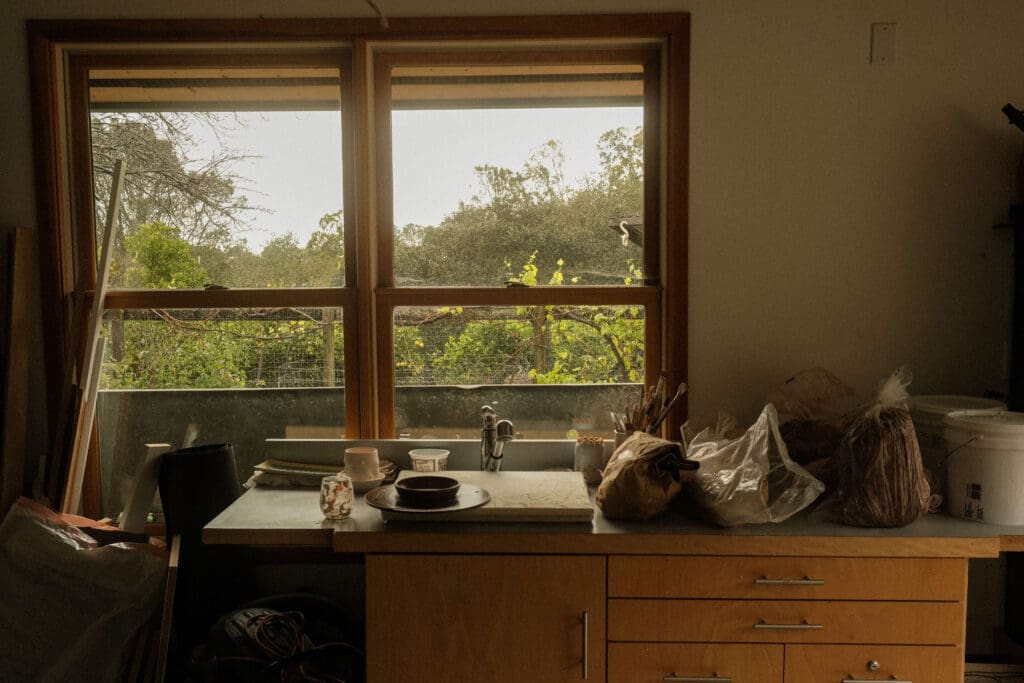
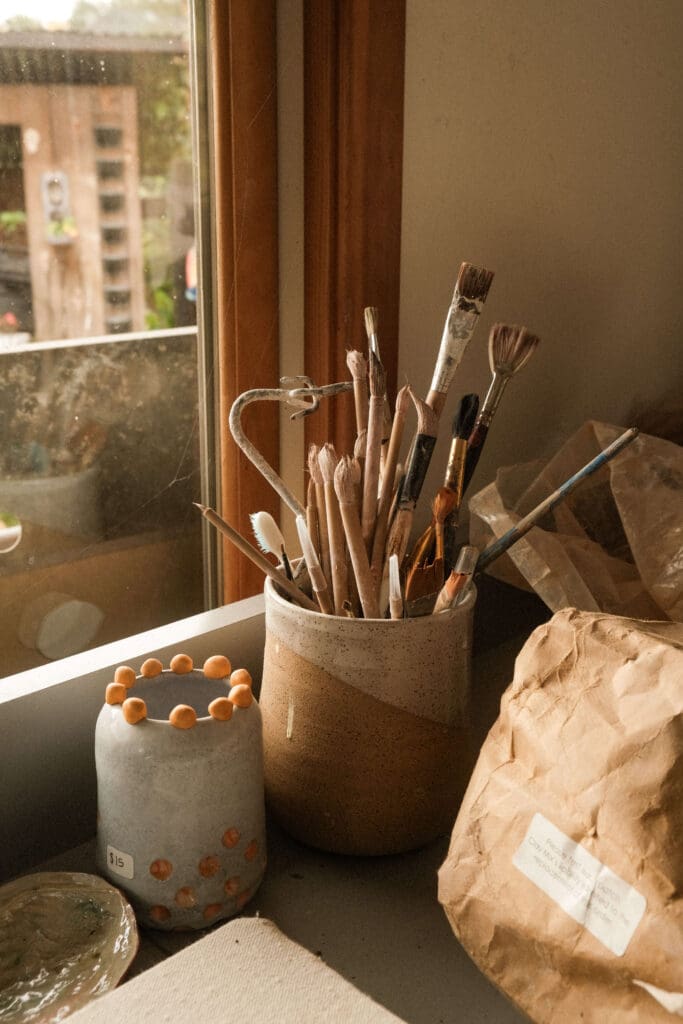
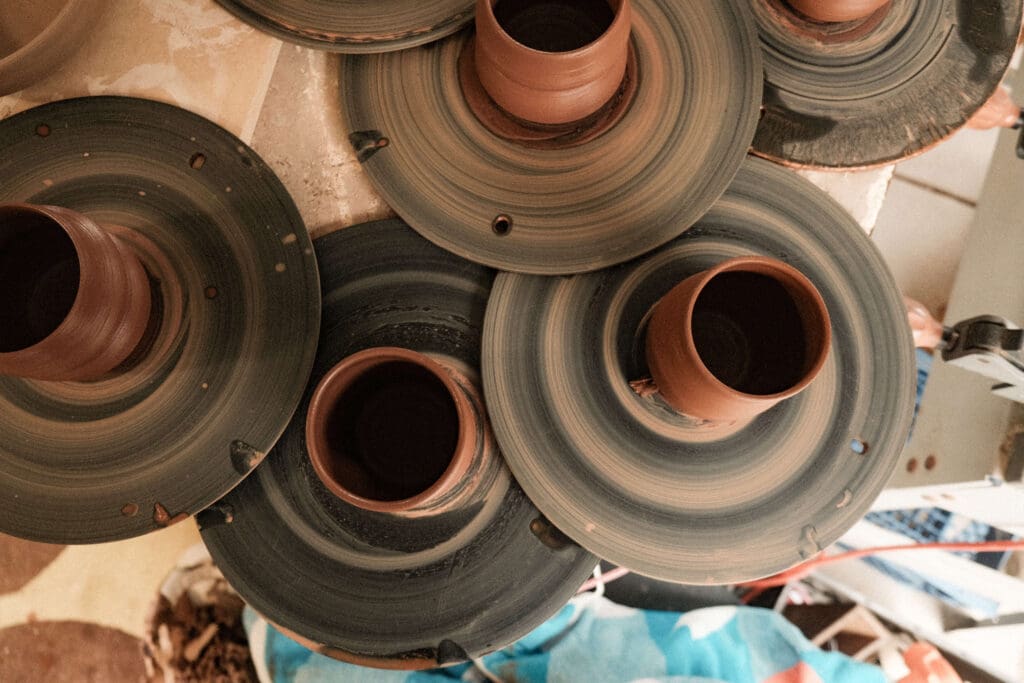
I’m building a world, not just a catalog.
The end deliverable is a set of images that adds up to a feeling – precision, care, patience, whatever your most important values are – and shows it instead of stating it. This also means variety. For Celeste’s shoot, my shot list included wide photos of her space, tight shots of her tools, full-body shots of her at the wheel, and the surroundings that shape how she works. Many of these are not directly pottery, but all of it is about her world as an artist. I still include final product shots, but strung together, the full set gives someone a real, layered sense of who they’re buying from.
If you’re a maker trying to figure out how to show people who you actually are — not just what you make — I’d love to talk about what that could look like for you.
